.png)

I Tried an Edwardian Hair Care Routine for a Month – Here's What Actually Happened

If you're dealing with hair shedding, breakage, or hair that just won't grow longer no matter what you try, this might be the reset you've been looking for.
I recently spent a full month following a real 1912 Edwardian hair care routine from opera singer Aline Vallandri, who was famous for her incredible floor-length hair.
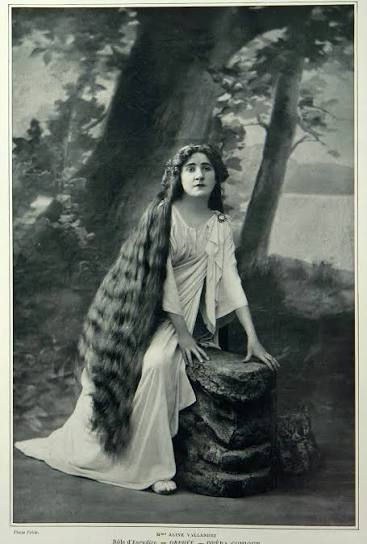
She shared her secrets in a 1912 interview for Every Woman's Encyclopaedia, and I decided to test it on my own textured, curly, postpartum hair. Spoiler: it was scary at times (hair singeing, anyone?), but the results surprised me in the best way—especially with my scalp feeling healthier than ever, and my hair softer, and more shiny and manageable than it’s been in years.
If you're curious about historical hair care, natural routines without frequent shampooing, or ways to grow longer, stronger hair, keep reading. I'll break down the key elements of Aline's routine, how I adapted it for modern (curly, postpartum) life, and what really happened after 30 days.
Why I Decided to Try This Edwardian Routine
Aline Vallandri was an opera singer known for her legendary floor-length hair. In her 1912 interview, she described a simple, low-maintenance routine that took only about 45 minutes a day total. No harsh chemicals, no daily washing—just smart habits to keep hair clean, strong, and shiny.

My hair? Textured curls that get dry fast, plus major postpartum shedding making everything feel fragile. I was nervous: would infrequent washing make my curls flat and my shedding worse? Would daily brushing cause breakage? But I had to know if these old-school methods could work better than modern ones.
(For the full breakdown of Aline's original routine, check my previous video and articles.)
Infrequent Hair Washing: The Scariest Part
Aline's big rule: "I wash my own hair as seldom as possible." She believed frequent water stripped natural oils, leaving hair dry and lifeless. Instead, she kept her scalp clean through daily care.
For me, this was terrifying. My curls rely on washing to refresh and define them—skip it, and they go flat. Then postpartum shedding hit peak levels: clumps coming out during detangling, making me panic that buildup was irritating my scalp.
The first couple of weeks were rough: flat curls, more visible shedding, and me wondering if the experiment was backfiring.
But I adapted things with a gentle DIY scalp spray (apple cider vinegar, black tea, lemon juice—recipe linked in my free hair growth guide). A few spritzes, massaged into my scalp, and it lifted buildup without needing a full wash. Combined with quick no-wash styling tricks, my curls looked fresh enough for videos and outings.
By the end of the month: shedding eased, my scalp felt cleaner, and the routine became effortless. No more marathon wash days—hair stayed manageable longer, tangles were minimal, and it felt grounding during a stressful time.
Daily Boar Bristle Brushing: The Game-Changer
Aline brushed her hair for 30 minutes every morning with a clean boar bristle brush, from roots to ends.
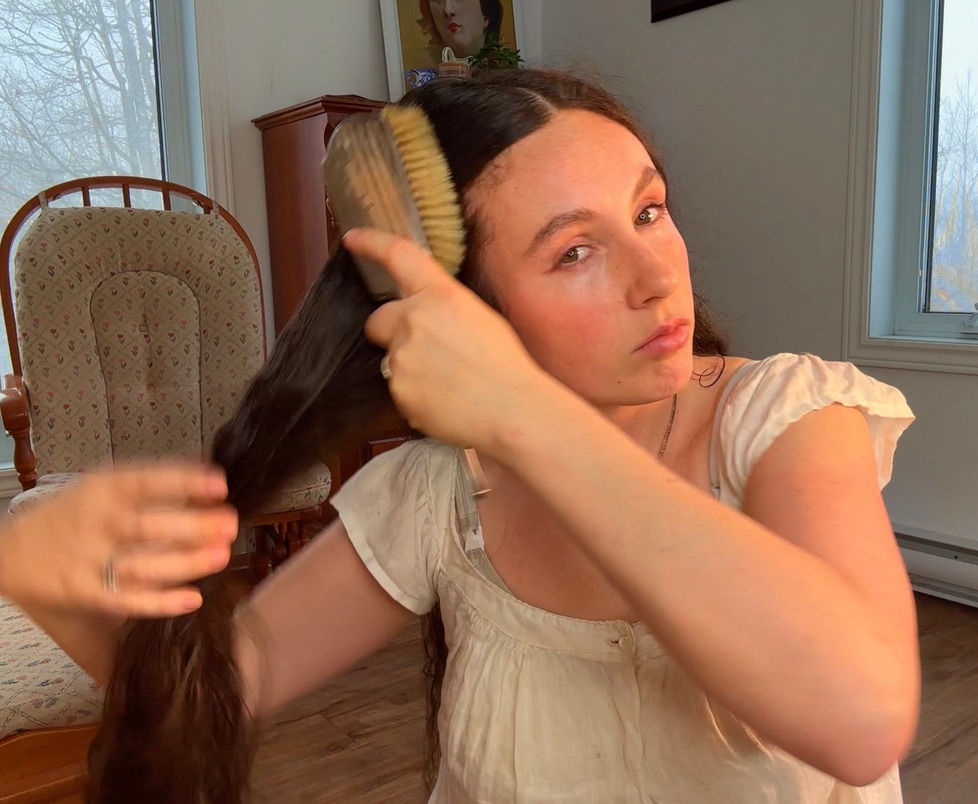
As someone raised on the Curly Girl Method (wide-tooth comb only, wet hair, no brushing!), this felt revolutionary—and risky. Would it cause breakage? Flatten my curls forever? Worsen shedding?
First weeks: yes, it flattened my curls completely. But since I wear my hair up most days anyway, that wasn't a huge deal.
Then the magic happened. Consistent daily brushing distributed my natural oils down the strands (curly hair struggles with this because oils get stuck at the top). My hair started feeling softer, shinier, and healthier-looking on camera. Scalp felt amazing—better circulation, less buildup.
I still don't know the long-term impact on length retention, but the scalp benefits alone made it worth it. For curly folks wanting to try: start with scalp-only brushing or save full sessions for pre-wash days.
Frequent Micro Trims and the Singeing Experiment
Aline trimmed her hair ends frequently to catch splits early and even singed them with a candle flame to seal them.
I've done micro trims for years—they work great. Daily brushing made them even more precise (hair lies straight, splits visible).

But singeing? I swore I wouldn't. Fire near hair? Terrifying.
I tried it once... and it went badly. A few strands caught too much flame—thankfully, nothing major shows now (maybe lost a tiny bit), but in the moment, I was horrified. Lesson learned: safe micro trims forever, singeing never again.
Scalp Massage and Light Hair Oiling
Aline recommended using a tiny bit of "brillantine" (light pomade) on the scalp, massaged until it tingled—no slathering.

I revived my love for scalp massage during postpartum shedding. A single drop of oil, massaged in, felt incredible. To avoid buildup, I would alternate this with a water-based Ayurvedic herbal scalp tonic (with MSM—find the recipe in my free Hair Growth Guide).
My scalp stayed stimulated and clean, and the ends soft. Perfect balance.
Protective Styles for Everyday
Aline likely wore soft updos daily to protect her length.
Postpartum made my usual low buns feel heavy on a tender scalp, so I switched to loose silk scarves most days. Ends tucked, no tension—just gentle protection. It felt comforting, like a little hug when things were fragile. Shedding didn't worsen, and it kept my hair safe without effort.
The Big Surprise: Egg Washing (Period-Accurate Bonus)

Aline didn’t mention her preferred washing method, but raw egg was a classic Edwardian gentle cleanser instead of harsh soap.
I'd used eggs in masks before, but never as a standalone wash. With my sensitive scalp, I was nervous about stickiness or limp curls.
The results? Surprisingly great—I'll share the full details in my next post/video (it tied in perfectly with the infrequent washing and helped with conditioning without stripping).

My Final Thoughts After One Month
Postpartum shedding made this experiment more intense, but it kept me connected to my hair in a positive way—instead of stressing over hair loss, the routine felt grounding.
My scalp health improved noticeably. Hair stays detangled at a baseline level, looks great in updos, and is always manageable. Defined curls aren't the goal here (I wear it up most days anyway), but the simplicity beats my old adapted Curly Girl routine—no more tangles after styling, and way less work.
What are the downsides? Brushing flattens curls, and I still have questions about long-term breakage. But overall: things started rough, and ended strong. My hair feels happier.
If you want results like this, check out my Herbal Hair Growth Oil and free Hair Growth Guide for natural support.
Would you try an Edwardian routine? Drop a comment—I read them all! Tell me your thoughts, or what historical routine I should test next (18th-century pomade and powder? Empress Sisi's tips?). Subscribe to my email list for more experiments—your longer, healthier hair might thank you. 💕
FAQ: Edwardian Hair Care Routine – Aline Vallandri’s 1912 Method
What is Aline Vallandri’s Edwardian hair care routine?
A simple 1912 routine focused on infrequent washing, 30 minutes of daily boar bristle brushing, light scalp oiling with massage, micro trims, and protective updos to keep hair strong, shiny, and long.
Does infrequent hair washing work for curly or postpartum hair?
It can improve scalp health and reduce dryness once your scalp adjusts. I used a DIY apple cider vinegar scalp spray for refreshers. Shedding eased and hair stayed manageable longer after the initial 1–2 weeks.
Is daily boar bristle brushing good for curly hair?
Yes — it distributes natural oils, softens hair, and boosts scalp health. It may flatten curls at first, so start gently or do it on pre-wash days. Clean the brush daily.
How do you adapt the Edwardian routine for modern curly or postpartum hair?
Use loose silk scarves instead of tight buns, add gentle scalp sprays for refreshers, alternate light oiling with herbal tonics, and keep micro trims. It becomes simple and low-maintenance.
Is singeing hair ends safe?
No. I tried it once and it went badly. Unless you or someone you know is very experienced, stick to safe micro trims instead.
Did the routine help with postpartum shedding?
It helped my scalp feel healthier and reduced tangles. Shedding eased by the end of the month and the routine felt calming during a stressful time.
What is an Edwardian egg wash?
Using raw egg as a gentle cleanser instead of soap. It conditions without stripping oils and worked well with infrequent washing.
How long does the Edwardian hair routine take?
About 20-30 minutes a day, mostly brushing. It gets quicker and easier with practice and eliminates long wash days.
Can this routine help hair grow longer?
It supports healthier growth by improving scalp health, reducing breakage, and minimizing damage. Many notice softer, shinier, more manageable hair.
Is the Edwardian hair routine safe for all hair types?
It works best with adaptations for curly, textured, or shedding hair. Introduce changes slowly and monitor your scalp. Consult a doctor for severe issues.
Where can I get recipes and tools for this routine?
Download my free Hair Growth Guide for the DIY scalp spray and tonic recipes. A quality boar bristle brush and light natural oils help too.
Should I try the Edwardian hair care routine?
Yes, if you want a simpler, natural approach. My hair felt softer, shinier, and easier to manage after 30 days. Try it for a month and see how your hair responds.


I first saw the video you posted a few days ago and was immediately intrigued by Aline’s technique. Not to mention, by how transcendently luxurious her hair was! I finally have my Amazon cart ready to make a copy of your DIY recipes, save one: the 4-ingredient scalp spray based on Aline’s. The blog post says it’s linked in your hair care guide, which is a wonderful resource (THANK YOU!!), but I must be overlooking it. I’ve located the hair tonic and can’t wait to make some but can’t seem to find the recipe for the spray. I’m a bit sad I can’t find it but am too excited to wait any longer before beginning on the other stuff, so…
I tried eggy car free during a short break and ended up playing much longer because each attempt feels different.
I am curious about Empress Sisi’s hair care. She lived some decades Alline, but maybe they share some methods?
Aloha Katherine,
I’ve been trying this experiment along with you — I have fine, thin hair that had seemed to reach a length and stop. My own routine had already veered towards washing less and less (maybe once ever four months) ; in the past I’ve used egg, rhassoul clay and ACV rinse, but fir the past year or so I’ve come to prefer only powdering my hair, though it caused build-up over time. I had also come to no longer singe my hair with a candle — but your discovery of Aline’s method inspired me to do it again. It’s not fun to singe and it stinks, but it works and honestly I now think this, along with da…
Thankyou for your post Katherine. The egg wash. Do you leave in for long? And follow up with a Apple cider vinager rinse?
Love your hands on Approach!