.png)

7 Edwardian Hair Secrets for Growing Floor-Length Hair

Have you ever seen those amazing photographs of historical ladies with floor-length hair and wished you could sit down with them and learn their hair growth secrets? Today we will be learning directly from the woman with "the most wonderful hair in Europe" all about her Edwardian hair routine for growing floor-length hair.
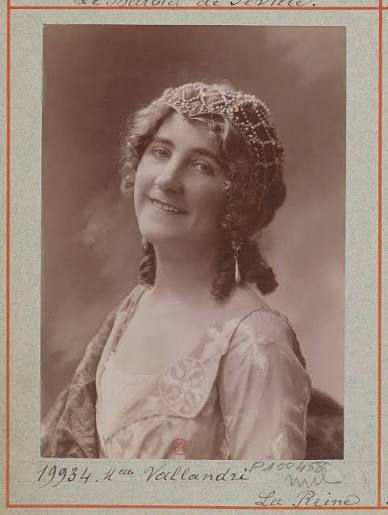
I’d like to introduce you to Aline Vallandri.
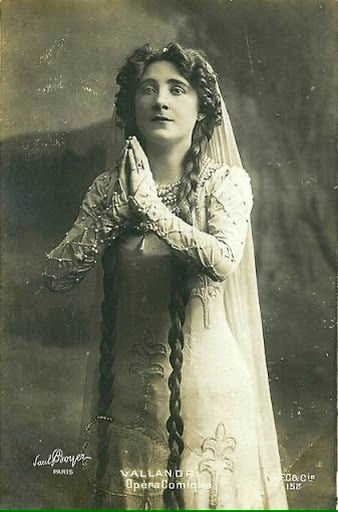
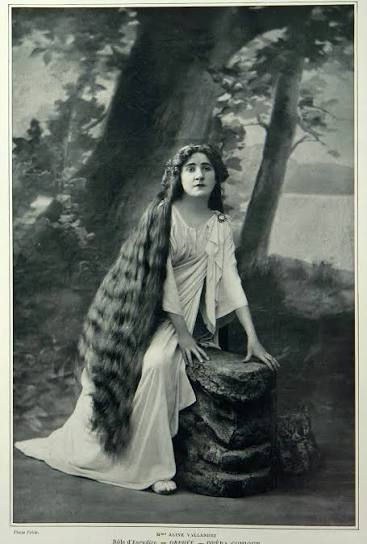
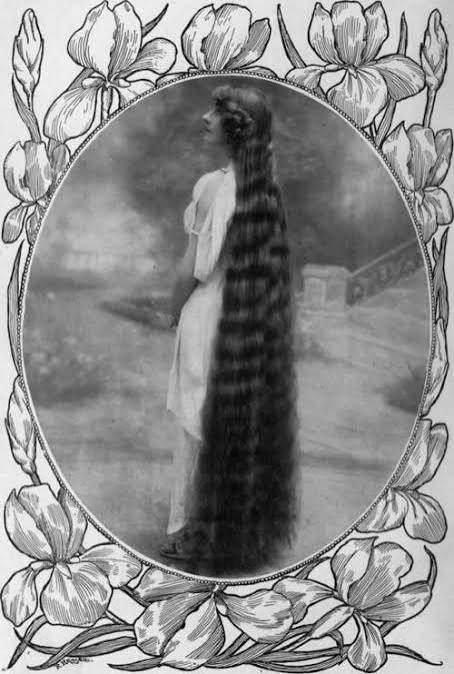
Aline was an Edwardian celebrity—an opera singer—with beautiful, luscious floor-length hair.
This article is for you if:
you have always wanted long hair and not understood why it isn’t growing
you are interested in a simple, more sustainable and self-sufficient way of caring for your hair
you are fascinated by how historical people cared for their hair.
I’d wager that even over a hundred years later, she is best known for her hair.
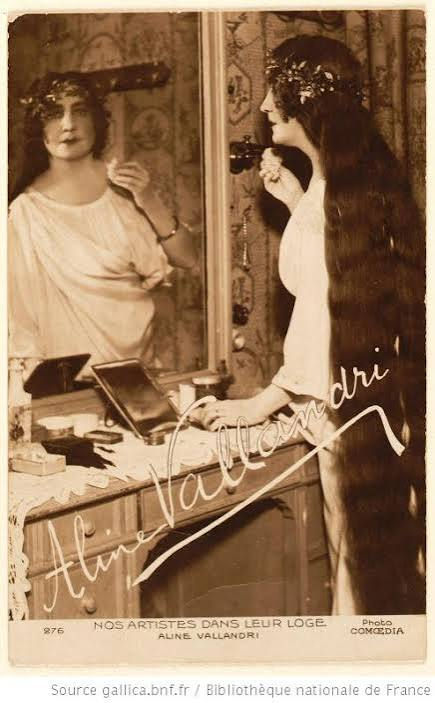
And lucky for us, she actually left those of us who thirst for gorgeous, long princess hair, an article all about her own hair care routine and her advice for those wanting to grow long hair.
You can read the full 1912 article here.
“It is not difficult [she says] to set down the rules I follow for taking care of my hair. Greatly as I prize and value my gift, I am no slave to it, for I devote only about three-quarters of an hour every day to its care. If women generally did the same, I have no doubt that in a short time they would soon notice an improvement in the condition of their hair.”
Did you get that? She only spent 45 minutes each day caring for her hair - an extraordinary achievement when you consider the sheer length of her hair.
In this article, we will be taking a deep dive into Alline's very juicy floor-length hair resource. We will break this down into 7 simple, actionable take-aways that can be adapted to any type of hair routine.
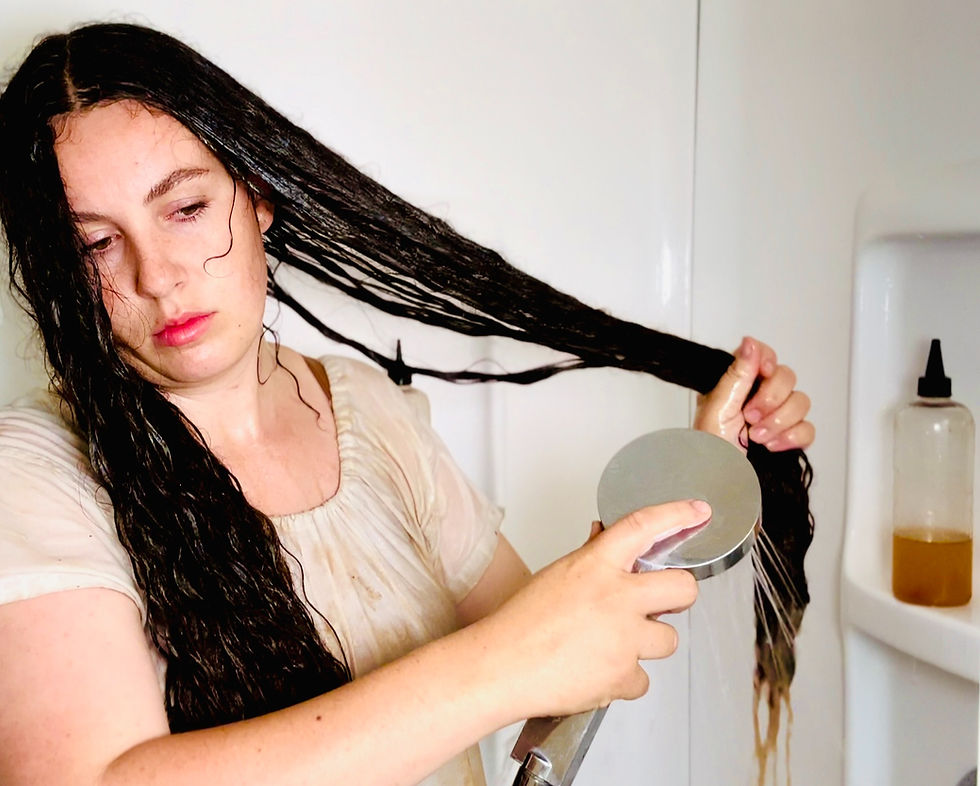
I have a part 2 already in the works that will be taking you along for my experience as I try Aline’s routine on my own hair over a period of time—you won’t want to miss that one!
So let’s break down the science—or at least the internal logic—behind the main aspects of Aline’s routine.
Throughout, we will keep an eye out for how each of these facets of Aline’s routine supported the pillars of her hair growth:
Scalp health
Length Retention
ALLINE’S Edwardian Long Hair Care Tips
Advice #1 - Infrequent Hair Washing
Aline’s quote: “I am perfectly certain that much washing of the hair with water is bad. As a matter of fact, I wash my own hair as seldom as possible.”
Is this contradictory? Aline advocates keeping hair clean but also not washing often with water?
We will be explaining how these two statements can coexist in the next point.
She is quick to note that there is no specific schedule for how often to wash, as it depends on many factors—like pollution in foggy London days vs. bright summer. So we can adapt this principle to our lives as modern people.
From modern science, we know that every time you wet your hair, the strand’s cuticle opens up, the strands swell, and then as they dry they gradually shrink back down. We have a modern term for something negative that can happen from wetting your hair too often: hygral fatigue.
Wet hair is also more fragile, so it stands to reason that wetting it less minimizes opportunity for breakage.
There is also a logic to infrequently washing a precious item, like a precious clothing item. Aline simply applied this to her hair.
So this aspect of Aline’s routine contributes to length retention by retaining the hair’s natural oils and limiting wet manipulation of the hair.
It also helps with scalp health, as she was avoiding harsh regular shampoos stripping away natural oils.
Length Retention — ✅
Scalp Health — ✅
But how on earth did Aline advocate for hair cleanliness when she was suspicious of frequent washing?
Advice #2 - Frequent Hair Brushing
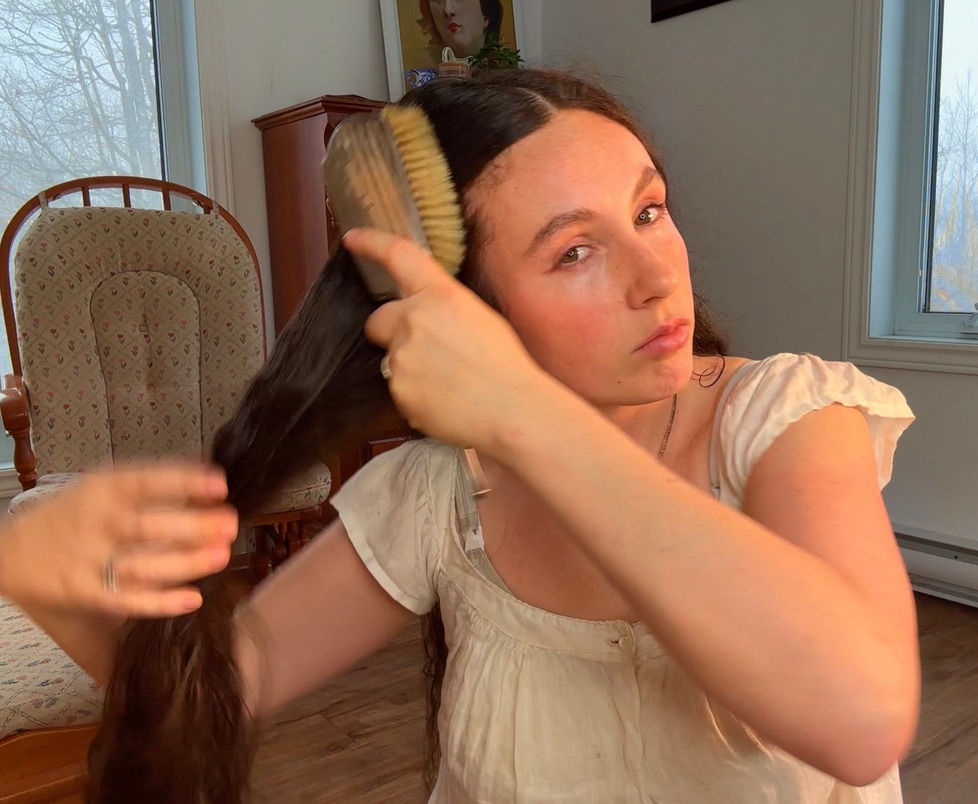
Aline’s quote: “Every morning when I get up my maid brushes my hair… The maid brushes both my scalp thoroughly and my hair from the roots to the end for half an hour… this brushing prevents the possibility of any scurf or dandruff – and scurf is death to the hair.”
She brushed her hair 30 min a day—or rather, had her maid do it. This may seem unattainable to us, but remember that she had floor-length hair. 30 min a day for that much hair isn’t all that much. I myself have been following Aline’s routine for the past couple of weeks, and I can gently boar brush all of my hair (which is thick, curly, and pretty long) in about 15-20 minutes in the evening.
So this regular brushing kept her scalp clean and healthy, massaged what she calls “scurf” (dandruff) and tension away, and brought a “lightness to the spirits”.
This also distributed oils evenly, which is the best product for your own hair, and thereby reduced the need to wash.
Scalp Health — ✅
Length Retention — ✅
I would be remiss if I didn’t point out the type of brush she is referring to—a 100% boar bristle brush. Boar bristles work differently on the hair than modern detangling brushes.
You can learn more about boar bristle brushing here. And you can see the boar bristle brushes and combs I recommend here.
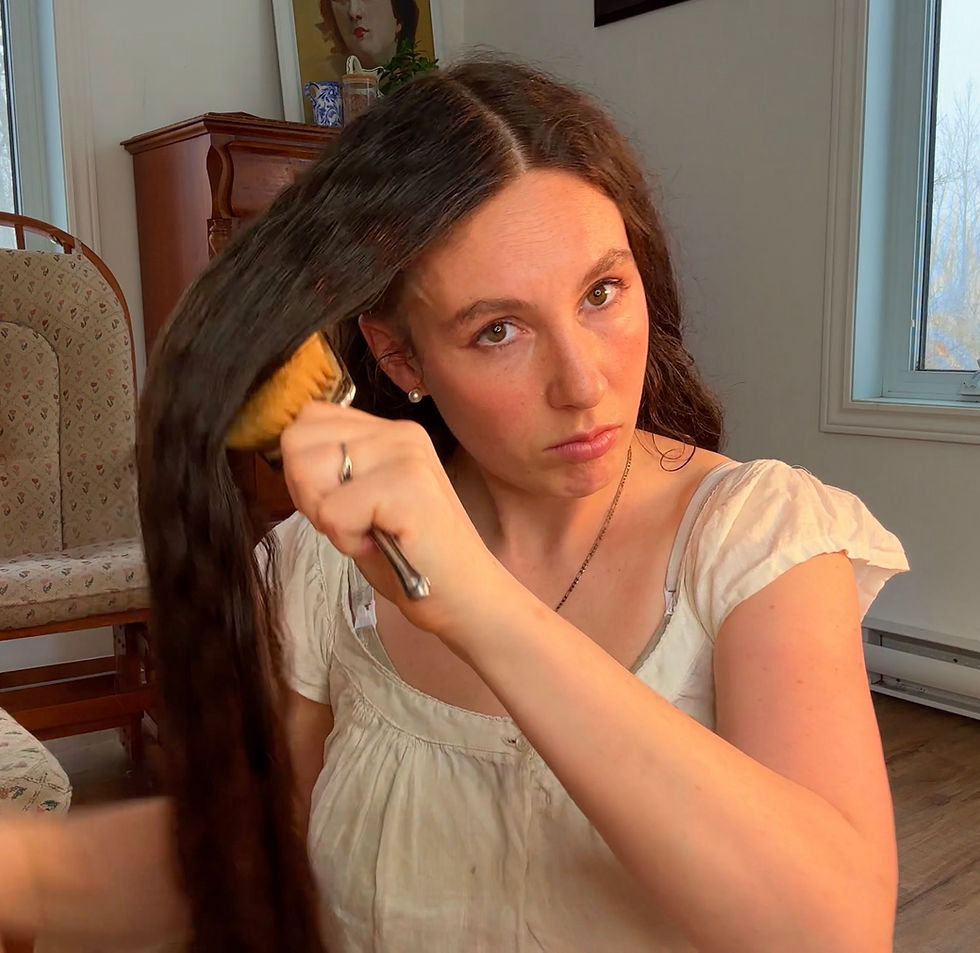
She was a stickler for cleaning brushes after every use, which makes perfect sense since this brush was picking up excess oils, dust, and dead skin.
Aline’s quote on clean brushes: “My own brushes are washed every day… If you think of it, it is no more nice to brush your hair with dirty brushes which have not been washed for two or three weeks than it is to dry your face with a towel which has not been washed for the same time.”
Advice #3 - Regular Micro-Trims
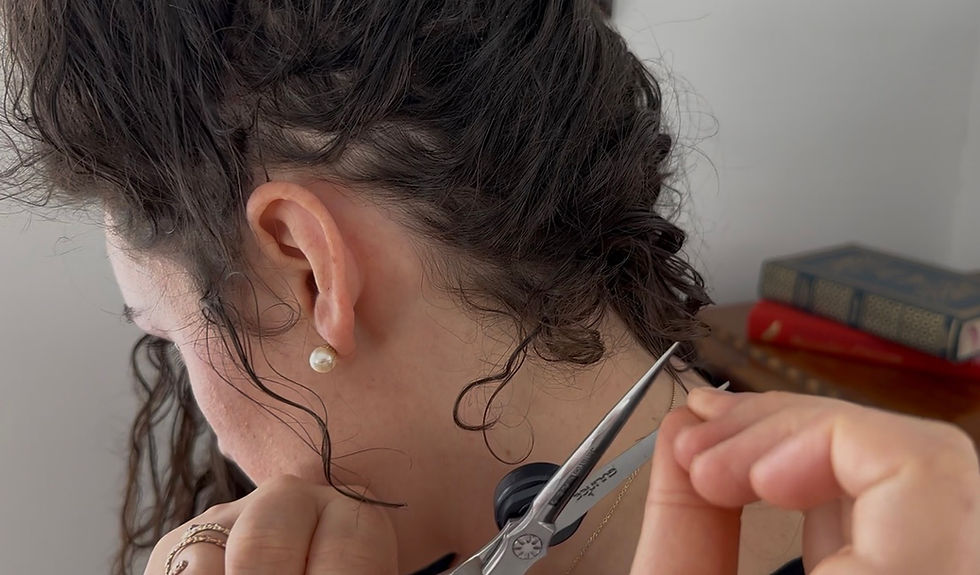
Aline’s quote hook: “I am quite sure [trims] do great good. I have the ends of my hair cut and singed very often… Just as the gardener cuts the branches of the young trees to make them grow stronger, so, it would appear, it is necessary for us to clip the ends of our hair if we would have it attain the most luxuriant growth of which it is capable.”
So Alline believed that regular small trims kept ends healthy like a gardener pruning a plant to remove dead bits and encourage more vitality to go to the healthy remaining parts.
In their minds → stimulating growth.
From a modern perspective, frequent micro- trims definitely help with Length Retention, removing little bits of damage on old hair ends regularly to maintain a certain baseline of health for the ends, reducing the chance of significant breakage or splitting later on.
Length Retention — ✅
Advice #4 - Scalp Massage
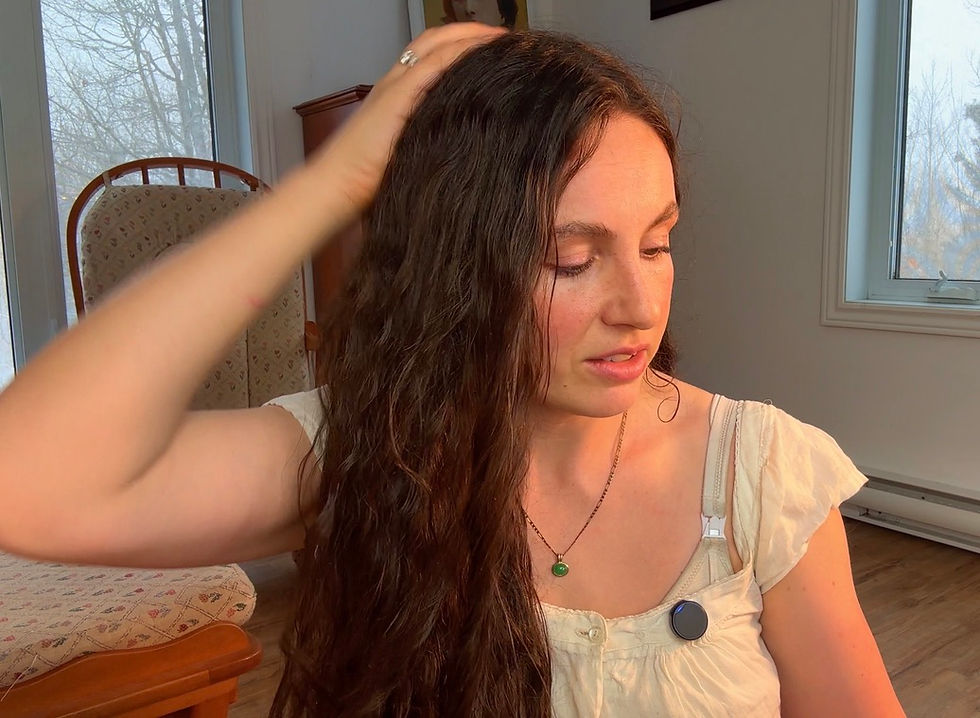
Aline’s quote: “Dip the tips of the fingers into the brillantine and rub it well into the scalp until you feel a distinct tingling. The result of this massage causes the blood to circulate very freely in the scalp…”
Aline was definitely a proponent of scalp massage, either through her hair brushing practice or directly with the fingers, adding oil if needed.
Scalp massage stimulates new growth, blood flow, and scalp health, and it has been practiced for hundreds if not thousands of years.
Scalp Health — ✅
Advice #5 - Hair Oiling
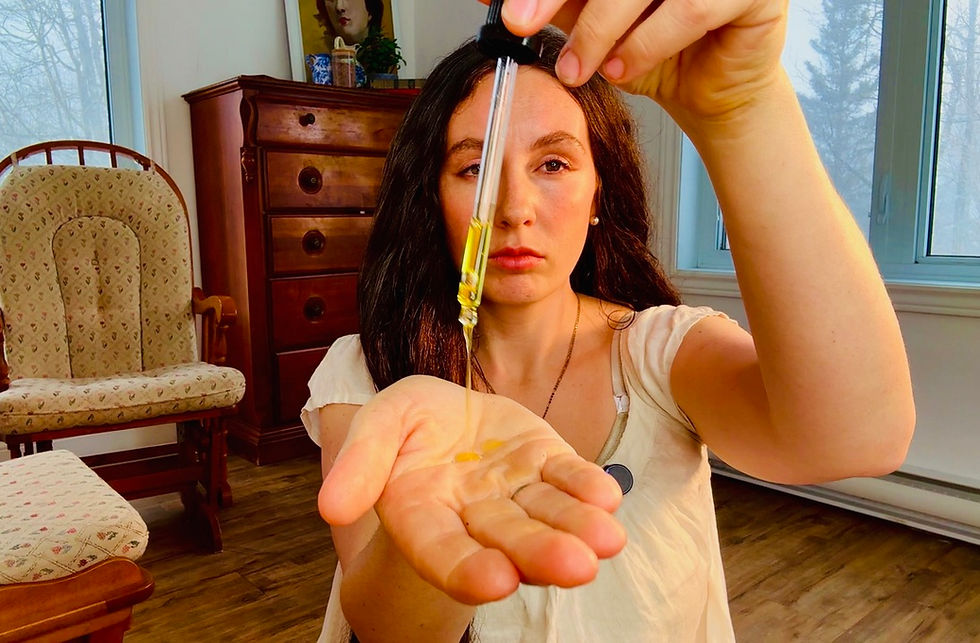
Aline’s quote: “If the hair is very dry, it is a clear indication that the little oil glands are not supplying enough nourishment. This must, therefore, be supplemented by the use of a little good brillantine…“
What is brilliantine? It still exists, and is a type of oil based pomade.
Aline, as well as other Edwardian hair care manuals, were proponents of using oils to encourage hair and scalp health.
She recommended for those with dry scalp and hair to use oil-based products to supplement oil production.
This also enhanced shine on the hair.
Scalp Health — ✅
Length Retention — ✅
IF you’d like to try my own hair growth blend that I have been developing and using for nearly a decade, you can learn about the ingredients and read the reviews here. It is a blend of 13 all natural, specially curated ingredients.
But first- how did Alline wash her hair?
Advice #6 - NO HEAT!!

Referring to heat tools, Alline said: "Those things are bad - very bad. Hot irons ruin the hair. The woman who uses curling-tongs courts disaster. The heat dries up the natural oil which is supplied by the little oil glands at the roots of the hair and keeps it soft and moist. The result of tongs or of heat is to make the hair brittle, so that it breaks off short. It stands to reason that if you are constantly breaking the hair it will never get long."
I think Alline said it all here. It goes without saying that avoiding heat on the hair aids with …
Length Retention - ✅
(Inferred) Advice #7 - Gentle Hair Washing
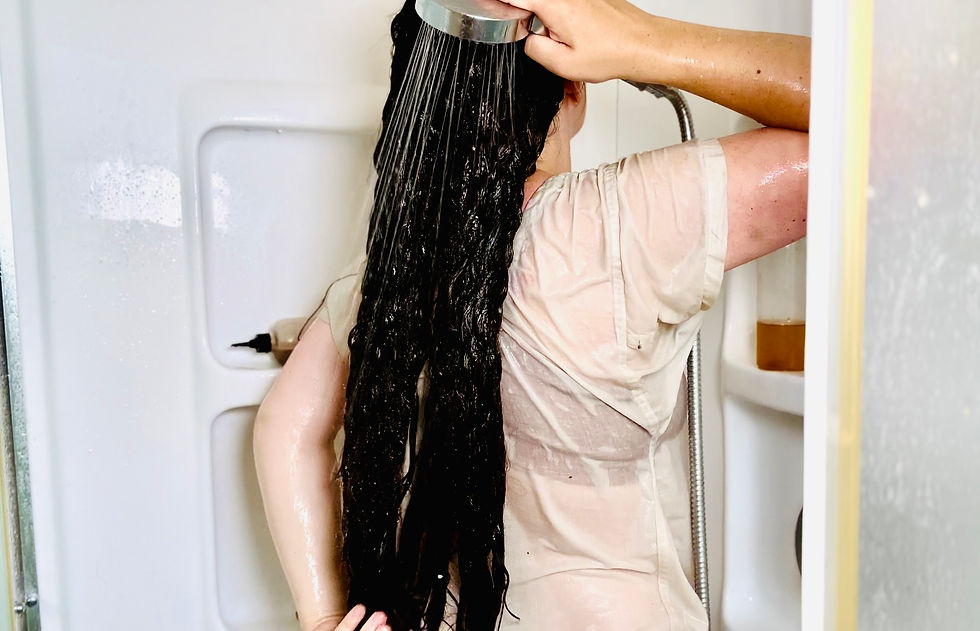
Alline sadly did not tell us how she washed her hair, but but other pieces from the time indicate that soaps or shampoos were usually considered too harsh. Instead, they used gentle methods to wash like diluted vinegar, or raw egg-based cleansers.
This would help her scalp retain its natural oils, and be gentler to her hair lengths, as well as strengthening.
Length Retention — ✅
Scalp Health — ✅
If you'd like to learn more about the natural, no shampoo method I've been using to cleanse my hair for a decade now, see my articles on clay washing, here and here.
Now how did Alline manage her day to day life with floor length hair? Let's find out...
Bonus Tip: Daily Protective Styling

Aline’s quote: After having her hair brushed for 30 min, Alline states: "The other quarter of an hour I devote to dressing it for the day.”
"Dressing" hair in modern lingo means styling it, and given the pictures we have of her with her hair up, plus the immense length of it, we can infer that she was styling her hair up everyday in popular styles of the period that evenly distributed the weight of her hair while avoiding tension on her hairline.
This is what I and others would call a “protective style”, because it protects the lengths of your hair from the elements and from mechanical damage; therefore, helps length retention.
Length Retention — ✅
On to Alline's Inadvisable (Read: highly dangerous!!) Bits of Hair Advice
Mercury on the scalp? Aline advocated treating the scalp with a mercury-based product (“golden ointment”) to treat certain conditions like scurf. While we can applaud her understanding the scalp-hair growth connection, we can not recommend using mercury on the scalp!!
Aline also advocated something called “ends singeing”, which was a historical practice of, essentially, trimming the hair ends with the heat from a candle flame rather than scissors. Obviously, this is very risky and we don’t recommend trying this at home!
Stay tuned for part 2 of this blog series where I will be showing you what it’s really like to follow an Edwardian long-hair routine!
Now what about that secret recipe we mentioned earlier? Aline had a secret lotion that she credited with helping her hair grow luxuriantly during her convent days:
“One of the nuns had a special lotion which she used for her hair. She gave me the recipe for it, and I have used it ever since. Unfortunately, I cannot make the recipe public, as I promised to keep it a secret.”
Mysterious, right? She believed any good doctor could prescribe something that could likewise grow hair long if persevered with.
But since we can’t get her exact formula, my herbal hair enriching oil is the next best thing—oil-based, nourishing, and full of growth-boosting herbs and ingredients that echo those old-world secrets.
It’s helped me and so many others reach new lengths—check out the reviews on my site!
Thanks for watching—hit like if you’re inspired to try some historical hair wisdom, subscribe for part 2 where I will test it all out, and drop a comment: What’s one Aline tip you’re most excited (or skeptical) to try?


Really helpful thread. Hair growth is a journey that requires patience, and it’s great to see people sharing their experiences and tips with others.
Bästa Nordic IPTV-leverantören
I've tried several IPTV Canada providers over the years, and this has been the best experience so far. The streaming quality is excellent with stable 4K IPTV, thousands of live TV channels, sports, movies, and TV shows. Setup was quick, customer support was responsive, and everything works smoothly on Firestick, Android TV, and Smart TV. If you're looking for the best IPTV Canada, a reliable IPTV subscription Canada, or a high-quality Canadian IPTV service, I definitely recommend giving them a try. Thanks for the great service!
I tried eggy car free during a short break and ended up playing much longer because each attempt feels different.
Analyse claire. Les innovations numériques influencent les usages. Des informations complémentaires sont disponibles sur le site web. Cela enrichit la compréhension.