.png)

How to Wash Your Hair with Raw Eggs: The Victorian Secret That Can Stop Shedding and Grow Hair Long and Healthy

Updated: Apr 21
If you’ve tried every modern shampoo and conditioner yet still deal with thinning, breakage, or hair that refuses to grow past a certain length, you’re not alone. I was exactly there—until I switched to a simple, natural approach to hair care. Recently, I decided to try a hair treatment that Victorian and Edwardian women relied on for decades: raw egg wash for hair.

What started as a curious historical experiment completely changed how I think about hair care. This gentle, whole-food method not only cleaned my hair beautifully but also dramatically reduced my postpartum hair shedding and left my strands stronger and more conditioned than any salon treatment ever did.
If you want to grow longer, healthier hair using time-tested, chemical-free methods, keep reading. I’ll share exactly why eggs work so well, my before-and-after results, and a detailed step-by-step guide—including a historical Victorian-inspired egg wash recipe—so you can try it yourself.
Why Historical Hair Care Methods Still Matter Today
Modern hair products promise miracles, yet many of us still struggle with breakage and shedding. Victorian and Edwardian women—known for their impressive hair lengths—washed far less often than we do today and avoided harsh soaps and shampoos. Instead, they turned to gentle, nutrient-rich ingredients like raw eggs.

Eggs have been used for hair care since ancient times, and for good reason. They fill the need for effective cleansing without stripping the hair. A raw egg wash delivers exactly that: a natural shampoo and conditioner in one.
How a Raw Egg Actually Cleans and Strengthens Hair

You might wonder: how can something as simple as an egg clean hair? Here’s the science behind it:
Egg whites act as a gentle cleanser and strengthening protein treatment. They bind to hair strands, helping reduce breakage and add shine.
Egg yolks provide rich fats, vitamins (including biotin), and nutrients that deeply condition the scalp and hair. They are also an emulsifier, so they can bind to dirt and oils and rinse them out of your hair.
Together, they create a complete treatment that nourishes follicles, removes buildup without stripping natural oils, and leaves hair feeling soft and manageable.
Empress Sisi of Austria, famous for her legendary long hair, even used egg yolks mixed with cognac as part of her routine. If it worked for her, I had to try it!
My Edwardian Egg Wash Experiment: What Actually Happened
After years of short, damaged hair and salon products that never delivered, I chopped my hair to chin length for a fresh start. Then I turned to historical hair care: less frequent washing, dry detangling, natural ingredients like clay and oils…
But I’d never yet tried the classic egg wash for hair.
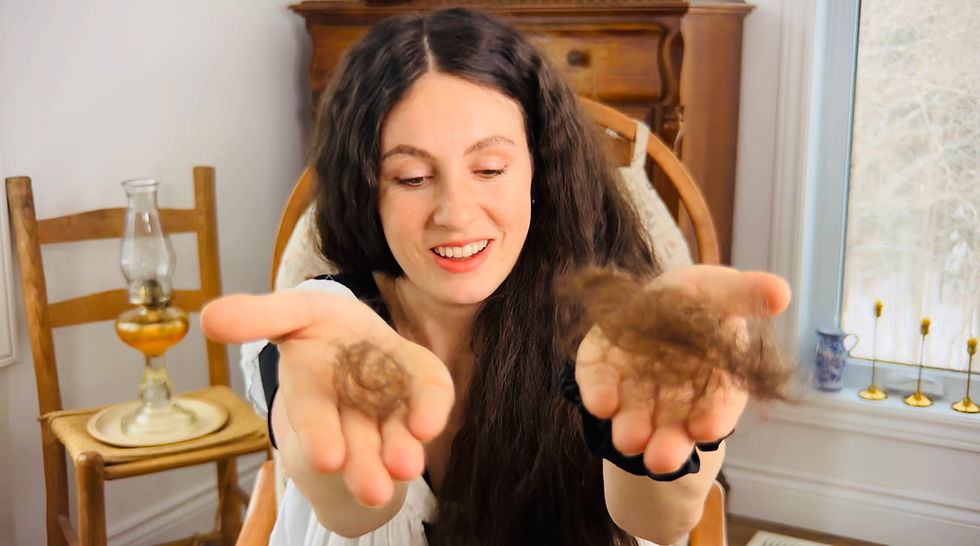
I was four months postpartum and dealing with significant hair shedding. Every detangling session left piles of hair in my brush. I felt panicked. Nothing seemed to help fast enough.
Then I tried my first egg wash on my now tailbone-length hair.

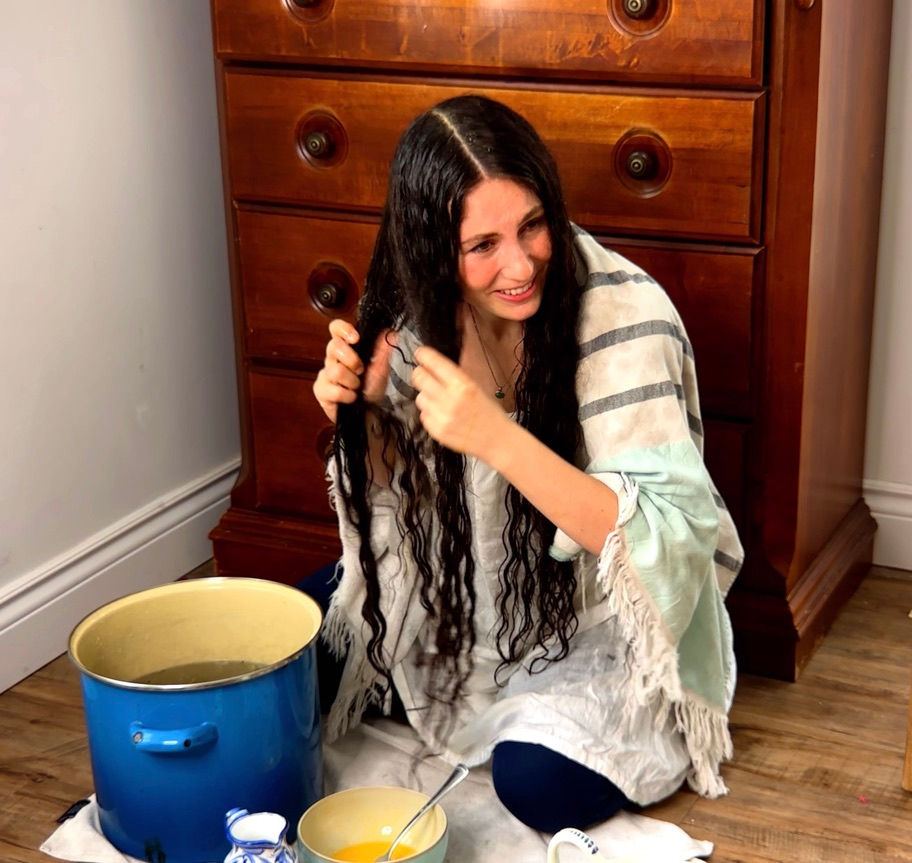
The results shocked me:
Postpartum shedding stopped almost immediately. The handfuls of hair I was losing during detangling virtually disappeared.
My hair felt deeply conditioned for days afterward—like I’d used an expensive deep-treatment mask.
Breakage reduced dramatically, and my natural texture became softer and easier to manage without heavy styling products.
To test it further, my husband Paul (who was also experiencing renewed thinning) tried the same egg wash. The same thing happened: the usual shower-floor shed hairs disappeared right after his first egg wash.

Was it a coincidence? Possibly. But after repeating the method, the pattern held. My shedding stayed minimal, and my hair continued growing stronger and longer than ever.
Three days later, my hair still felt silky and nourished—proof that eggs truly act as both shampoo and conditioner.
How Victorian Women Washed Hair With Eggs – Step-by-Step Historical Recipe
Historical beauty manuals from the Victorian and Edwardian eras often recommended egg washes (especially yolks) for gentle cleansing and shine. Recipes varied—some used just yolks beaten to a cream, others mixed with cognac or water—but the core idea was simple: eggs provided proteins and fats for strength and softness.
Here’s a straightforward, historical-inspired version based on period practices (adapted for modern use with whole eggs for easier application and better results):
Why You Would Want to Try This
Victorian women used egg washes to maintain long, glossy hair without harsh soaps that stripped natural oils. It nourishes the scalp, strengthens strands to prevent breakage, adds shine, and helps retain length—perfect if you’re dealing with shedding, thinning, or damage.
Ingredients and Tools
1–3 fresh eggs (start with 2 for medium-length hair; use more for longer/thicker hair)
Optional: A few drops of essential oil (like lavender or peppermint) to mask any scent
Bowl and whisk/fork for mixing
Lukewarm water for wetting hair
Optional final rinse: Diluted apple cider vinegar (1 part ACV to 4 parts water) for shine and pH balance
Mixing
Crack the eggs into a bowl (use whole eggs for balanced cleansing and conditioning, or just yolks for a more conditioning cleanser). Whisk gently until smooth and slightly frothy—avoid over-beating to prevent too many bubbles. If adding essential oil, stir it in now. Let the mixture come to room temperature if your eggs were refrigerated.
Applying
Wet your hair thoroughly with lukewarm water (never hot, as it can cook the egg!). Section your hair if needed. Pour or scoop the mixture onto your scalp and massage it in gently with your fingertips, working from roots to ends. Cover all areas for even distribution. Leave it on for 5–15 minutes (historical sources often suggest 10–15 minutes for deeper nourishment).
Rinsing Out
Rinse thoroughly with cool or lukewarm water until the water runs clear. Use cool water to seal the cuticle and enhance shine—avoid hot water to prevent any residue. Follow with a diluted apple cider vinegar or tea rinse if desired, then rinse again. Gently towel-dry (no vigorous rubbing).
Finished Results
Your hair should feel clean yet deeply conditioned, with noticeable softness, reduced frizz, and added strength. Many report shinier, more manageable hair that holds styles better and sheds less during brushing.
Suggested Frequency
Start with once a week or every 10–14 days. Historical routines often involved infrequent washing (once every 1–2 weeks), so eggs helped maintain cleanliness between washes. Adjust based on your hair type—if it feels protein-heavy or overly coated, reduce frequency.
Why Egg Washing May Be the Missing Piece for Long, Healthy Hair
Eggs deliver proteins, healthy fats, and vitamins directly to your scalp and strands—exactly what thinning or damaged hair needs. They strengthen individual hairs so they break less, which means more length retention and that “strength in numbers” effect that historical women enjoyed.
This one simple change helped me move past postpartum shedding and keep my hair long and strong without expensive products or chemicals.
Want Even Faster Results? My Herbal Hair Growth Oil
Years before the egg wash experiment, I created a custom herbal hair growth oil using forgotten Victorian-inspired recipes. After thousands of women worldwide saw incredible results (thicker hair, less breakage, and visible length), I started offering it as a ready-made blend.
If you’re serious about supporting your scalp and growing longer, thicker hair naturally, check out my Herbal Hair Growth Oil here: [link to your product page]. Read the hundreds of five-star reviews and see if it’s the missing piece in your routine.
Ready to Try the Victorian Egg Wash?
Have you ever washed your hair with raw eggs? Would you try it? Drop a comment below and let me know your results—I read every single one!
If you loved this historical hair care experiment, subscribe for more natural, time-tested routines that actually work. Your longer, healthier hair journey starts with one simple ingredient from your kitchen.
What historical hair secret should I test next? Let me know—I’m always experimenting!

Frequently Asked Questions About Washing Hair with Raw Eggs
Does washing hair with raw eggs really help stop shedding and grow long healthy hair?
Yes, many people report noticeable reductions in hair shedding and improved strength after using a raw egg hair wash. The natural proteins from egg whites help reinforce strands to reduce breakage, while the fats and biotin in the yolks nourish the scalp and hair. This combination supports better length retention and healthier growth over time, much like the routines used by Victorian and Edwardian women.
How often should I wash my hair with raw eggs?
Start with once a week or every 10–14 days. Historical hair care routines involved infrequent washing, and raw egg washes work well as a gentle cleanser and conditioner between regular washes, or as a standalone wash and conditioning method. Adjust based on your hair type—if your hair feels weighed down or overly coated, reduce the frequency. Or, you can use just the yolks. Experiment to find what works for you!
Can I use whole eggs or just the yolks for a raw egg hair wash?
Both work well. Whole eggs provide a balanced mix of cleansing proteins from the whites and rich conditioning fats from the yolks. Using only yolks creates a more moisturizing treatment, which is great for drier hair or deeper conditioning. Start with whole eggs for most hair types.
Is it safe to wash hair with raw eggs, and will they smell?
Raw egg hair washes are generally safe when using fresh eggs and rinsing thoroughly with cool or lukewarm water. Any mild scent usually fades quickly after rinsing, especially if you add a few drops of lavender or peppermint essential oil during mixing or follow with a diluted apple cider vinegar rinse for freshness and shine.
How do you rinse raw eggs out of hair without them cooking or leaving residue?
Always use lukewarm or cool water—never hot—to avoid cooking the egg. Massage the mixture in gently, then rinse slowly and thoroughly until the water runs clear. A final diluted apple cider vinegar rinse (1 part vinegar to 4 parts water) can help remove any remaining residue and leave hair shinier.
What are the benefits of a Victorian-style raw egg hair wash?
This method gently cleanses without stripping natural oils, strengthens strands with protein, conditions with healthy fats and vitamins, reduces breakage, adds shine, and helps minimize shedding. It’s a simple, chemical-free way to support longer, healthier hair, similar to practices used by women in the Victorian and Edwardian eras who were known for impressive hair lengths.
Will a raw egg hair wash work for all hair types?
It can benefit most hair types, especially those experiencing shedding, breakage, or dryness. People with very oily hair may prefer using it less often or focusing on the scalp only, while those with dry or damaged hair often see excellent conditioning results. Always do a small patch test first if you have sensitive skin or allergies to eggs.
Can men use raw egg hair wash too?
Yes. The nourishing proteins and fats in eggs support scalp and hair health for everyone. Many men dealing with thinning or shedding have reported positive results, including reduced hair loss in the shower and stronger-feeling strands after consistent use.
How long does it take to see results from washing hair with raw eggs?
Some people notice less shedding and softer hair after the first or second use. Deeper improvements in strength, shine, and length retention often appear after 4–6 weeks of regular use (once a week or every 10–14 days) combined with gentler overall hair care habits.
What should I do if I don’t like the idea of raw eggs in my hair?
If raw eggs aren’t appealing, you can explore other historical or natural alternatives such as herbal rinses, clay washes, or gentle homemade hair treatments. The key is finding low-manipulation, nourishing methods that avoid harsh detergents and support your scalp’s natural balance.


I have washed my hair using eggs, green tea and a few drops of rosemary essential oil(to keep colour) for many years. I was a Royal Marine for 22 years and I am now 76 years young, my former comrades in arms say I never change especially as my hair is still brown, and I have no baldness, unlike most of them, grey and bald.
I've tried several IPTV Canada providers over the years, and this has been the best experience so far. The streaming quality is excellent with stable 4K IPTV, thousands of live TV channels, sports, movies, and TV shows. Setup was quick, customer support was responsive, and everything works smoothly on Firestick, Android TV, and Smart TV. If you're looking for the best IPTV Canada, a reliable IPTV subscription Canada, or a high-quality Canadian IPTV service, I definitely recommend giving them a try. Thanks for the great service!
I tried eggy car free during a short break and ended up playing much longer because each attempt feels different.
Для пользователей технологии сделали игровой процесс значительно быстрее и доступнее. Регистрация занимает несколько минут, игры запускаются практически мгновенно, а выбор развлечений стал намного шире по сравнению с традиционными казино. При этом сам принцип азарта практически не изменился. Интерес к случайности, ожидание результата и эмоциональное вовлечение остаются теми же, что и раньше. Изменилась в первую очередь форма подачи и техническая организация всей системы.
~ Hi Katherine,
I remember when I first started sending you emails, I was already using raw eggs + the whites to wash my naturally curly hair. Before I found you via YT, I found a young woman (also on YT) who washed her curls with raw eggs. She got great results. That's how I actually got started. Although my curls are thick, I love how raw eggs cleanse not only my curls but my scalp too.
My curls are washed with Rhassoul Clay once or twice a month. Then I'll switch back to using raw eggs. My curls and scalp respond well to both. For anyone looking for a more natural approach to hair washing without commercial shampoos, …