.png)

Henna Hair Dye Recipes for Every Hair Color: Exact Natural Mixes with Amla, Indigo & Cassia

Updated: May 18
Have you ever wondered what hair care looked like before modern chemicals existed? Let me show you the exact ritual historical people used for thousands of years to grow and colour their hair naturally. Henna has become one of my favourite forgotten tools—not just for colour, but for serious strength, shine, and conditioning that actually helps with shedding and breakage.

In this complete guide I’m sharing the exact henna recipes for different hair colours, all scaled for average/medium-length hair. These use a simple overnight approach for the best dye release, slightly acidic liquid for releasing henna’s natural dye, and a little oil added only at the very end for extra slip and nourishment.
Note: The quantities below are for average/medium-length hair (shoulder to mid-back). For longer hair like tailbone length, simply increase all powder amounts proportionally (for example, double everything for very long, thick hair) and use more liquid as needed to reach the right consistency. Always do a strand test first.
Watch the full video where I mix and apply one of these live on my own tailbone-length dark brown hair (link in the description below). You’ll see the before-and-after texture and exactly how it feels.


Why Natural Henna Hair Dye Works So Well
Henna coats the hair shaft with lawsone pigment while delivering proteins, tannins, and conditioning benefits that reduce breakage and add incredible shine. It’s perfect for anyone wanting longer, healthier hair without stripping the natural oils. The colour is semi-permanent and builds with each application, so you get that elegant, lived-in look historical women achieved with minimal effort.
Henna for Different Hair Colours – Quick Guide
Straight red or auburn tones? Use plain henna on its own.
Warm-brown shades? Mix in amla powder. Amla cools the orange-red tones, adds shine, and gives a more elegant, neutral brown.
Deeper dark brown or black? Combine henna with indigo. The more indigo, the darker and cooler the result.
Blonde, lighter tones, or gentle golden highlights? Use cassia (neutral henna) mixed with chamomile or marigold tea.
Grey or white hair? Cassia is your best friend—it conditions beautifully and can give a soft golden tint without heavy colour.
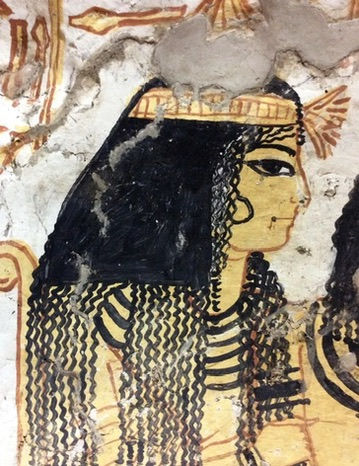
These ratios are flexible. Start small, test on a strand if you can, and adjust. The beauty is you get the strengthening benefits no matter what, and the colour is more of a translucent stain that builds over time instead of something harsh and permanent.
Exact Henna Recipes for Average/Medium-Length Hair
1. Pure Henna – Rich Red or Auburn

Ratio: 100% henna
Ingredients:
50–60 g high-quality henna powder
Strong brewed green tea (cooled to warm)– about ¾–1 cup (or warm water + 2 tsp lemon juice or apple cider vinegar for acidity)
1-2 tsp jojoba, olive, or my Herbal Hair Growth Oil (added after dye release)
Best for: Warm auburn or vibrant red tones on any starting colour.
2. Henna + Amla – Warm Natural Brown

Ratio: 3 parts henna : 1 part amla
Ingredients:
50–60 g henna powder
17–20 g amla powder
Warm water only (about ¾–1 cup – amla provides the acidity)
1-2 tsp jojoba, olive, or my Herbal Hair Growth Oil (added after dye release)
Best for: Soft, shiny brown with reduced warmth and extra conditioning.
3. Henna + Indigo – Medium to Dark Brown (No Amla)

Ratio: 1 part henna : 1/2-1 part indigo (use 1:1 for medium brown, 1:2 for darker)
Ingredients:
50–60 g henna powder
30-60 g indigo powder
Strong brewed black tea (cooled to warm) – about ¾–1 cup total
1-2 tsp jojoba, olive, or my Herbal Hair Growth Oil (added after dye release)
Best for: Natural depth without red tones.
4. Henna + Amla + Indigo – Balanced Medium Brown What I Used
Ratio: 1 part henna : 1/3 part amla : 1 part indigo
Ingredients: (great for dark brown hair wanting a subtle shift)
50–60 g henna powder
17–20 g amla powder
50–60 g indigo powder
Warm water only (about ¾–1 cup total)
1-2 tsp jojoba, olive, or my Herbal Hair Growth Oil (added after dye release)
Best for: Rich medium brown with cool tones, shine, and strength on already dark hair.
5. Cassia (Neutral Henna) – Blonde, Light Tones or Grey Hair

Ratio: 100% cassia
Ingredients:
50–60 g cassia powder
Strong chamomile tea or marigold tea (brewed and cooled to warm) – about ¾–1 cup (for gentle golden highlights)
1 -2 tsp jojoba, olive, or my Herbal Hair Growth Oil (added after dye release)
Best for: Conditioning with soft golden tones on light or grey hair. No strong colour change.
Step-by-Step Mixing Instructions
This is the exact order to mix your herbal hair dye—it’s super forgiving and kitchen-friendly.
The night before (or at least 8–12 hours ahead), use a non-metal bowl and spoon to begin getting your natural dye ready.
If using amla, mix the henna and amla powders together first. If not using amla, just add the henna powder.
Gradually add your warm liquid (plain warm water when using amla; black tea or acidified water (with added vinegar or lemon juice) otherwise) while stirring until you get a thick, yogurt-like consistency—smooth and spreadable but not runny.
Cover tightly with plastic wrap and let it sit at room temperature for 8–12 hours. The paste will darken as the dye releases.
The next day, if using indigo, mix the indigo powder separately with a little warm liquid into a smooth paste.
Stir the indigo paste into the released henna mixture until uniform.
Now add 1 tbsp jojoba, olive, or my Herbal Hair Growth Oil and give it one final stir. This is the perfect time for the oil—after the dye has fully released—so you get great slip without interfering with color development. For longer hair, increase the oil slightly if needed.
How to Apply Henna to Hair
Apply to clean, dry hair.
Protect your hairline and ears with a thin layer of Vaseline or similar. Wear gloves.
Section your hair and work the mixture from roots to ends, massaging it in thoroughly.
Cover with a disposable shower cap, or plastic wrap and towel or reusable hair cap overtop. Leave on for 2–4 hours (start with 2–3 hours the first time).
Rinse with cool to lukewarm water only—no shampoo for at least 24–48 hours so the colour can oxidize and settle.

Aftercare & What to Expect
Your hair will feel thicker, softer, and shinier right away. The colour develops fully over the first 48 hours and looks incredibly natural. Henna is a hair strengthener, which can potentially make hair feel a little brittle at first. If you notice this, use a deep conditioning treatment of your choice.
Repeat every 2-3 months to maintain the colour and continue strengthening your hair.
Quick Tips
Always do a small strand test first.
Results build beautifully over time—your hair just keeps getting stronger.
Store dry powders in airtight containers and mix fresh each time.
For longer hair, double the powder amounts (and adjust liquid accordingly) to ensure full coverage from roots to ends.
Frequently Asked Questions
1. What is the best henna recipe for brown hair?
For warm natural brown, use the Henna + Amla mix (3:1 ratio). For a cooler, richer medium-to-dark brown, try the Henna + Amla + Indigo recipe.
2. How do you make henna hair dye at home for different hair colours?
Mix high-quality henna powder with the right herbs: plain henna for red/auburn, henna + amla for brown, henna + indigo for dark brown/black, and cassia for blondes or grey hair. Follow the overnight dye release method in the full guide above.
3. Can henna cover grey hair naturally?
Yes. Cassia alone gives a gentle golden tint and excellent conditioning on grey hair. For fuller coverage, use Henna + Indigo or Henna + Amla + Indigo mixes.
4. How long do you leave henna in your hair?
Leave the paste on for 2–4 hours for best results. The colour continues to develop for 48 hours after rinsing.
5. Does henna damage hair or make it stronger?
Henna strengthens hair. It coats the shaft with natural proteins and tannins, reducing breakage, adding shine, and improving overall hair health.
6. What is the difference between henna, amla, indigo, and cassia?
Henna = red/auburn tones
Amla = cools the red into brown + extra shine
Indigo = darkens to brown or black
Cassia (neutral henna) = conditions with soft golden highlights
7. How often should you apply henna hair dye?
Every 2–3 months is ideal. The colour builds gradually and your hair gets stronger with each application.
8. Can I use henna on chemically dyed or bleached hair?
Yes, but always do a strand test first. Results may vary on processed hair.
This simple henna ritual can be a game changer, not only for naturally colouring hair, but for strengthening and adding body. If you’re ready to try it, grab the exact recipe that matches your hair colour above and let me know in the comments which one you’re starting with!
Watch the full video to see me mix and apply it live.
If you want even more growth support, check out my herbal hair growth oil that thousands of women are using alongside these natural routines.
Sign up for my email list so you don’t miss the next more historical, natural hair care experiments that actually work, and drop a comment below: Would you try henna for your hair colour?


I've tried several IPTV Canada providers over the years, and this has been the best experience so far. The streaming quality is excellent with stable 4K IPTV, thousands of live TV channels, sports, movies, and TV shows. Setup was quick, customer support was responsive, and everything works smoothly on Firestick, Android TV, and Smart TV. If you're looking for the best IPTV Canada, a reliable IPTV subscription Canada, or a high-quality Canadian IPTV service, I definitely recommend giving them a try. Thanks for the great service!
I tried eggy car free during a short break and ended up playing much longer because each attempt feels different.
Fairplay24 offers an excellent balance between functionality and simplicity. The platform is designed in a way that makes everything feel straightforward and accessible. I especially enjoy how fast pages load and how organized the overall structure is. The Fairplay24 Login feature works efficiently, making account access quick and convenient. Visit to know More- https://fairplay24ss.net.in/
Thank you for sharing such a personal and thoughtful experience. Articles based on real-life experiences often provide valuable perspectives that readers can relate to and learn from. The honest discussion about comfort, challenges, and observations throughout pregnancy helps create a balanced and informative narrative. Personal stories encourage readers to consider different viewpoints while making their own informed decisions. Whether discussing lifestyle choices or using convenient digital services like 99exch login, transparency and authentic experiences often help people feel more confident and informed. This article offers an engaging perspective and contributes to meaningful conversations about individual experiences during pregnancy.
I would love to use henna, but the orangey tones do not suit my complexion. I need a blue-toned red. Can you suggest anything? Would a small amount of indigo have that effect?