.png)

7 Historical Hair Habits to Grow Long + Thick Hair at Any Age

Updated: 6 days ago
What if there were a few simple, time-tested and actionable techniques you could put into practice starting today, that would help you grow long, thick, healthy hair no matter what your age?
Because the truth is that while hair growth, as an extension of our state of health and our bodies, can be complicated, there are also simple, effective tips and principles that we can apply, starting today, to maximize our hair's potential.

And yes, these will help you no matter what age or stage of life you are in, and no matter what your hair type.
Today's article will go over the top 7 tips for growing long, thick, healthy hair at any age.
But who am I to be giving you these tips?
I am a regular person with admittedly naturally thick hair, but I have struggled with hair loss, breakage, and hair that seemingly wouldn't grow past my shoulders, for a significant portion of my life.

In fact, for some time, I simply accepted the "fact" that my genetics were to blame for my perpetually short hair. But then something changed. First in my belief system, and later, in my hair itself.
About a decade ago, through my love of historical fashion, I began to investigate historical haircare. Why? Because there were seemingly so many women from the past with ridiculously long hair. With fear and trepidation, I started applying some of these old principles to my hair care routine. My hair was chin length at the time.

The result was that my hair managed to grow down to my tailbone, when it had never grown anywhere near that long before. It took several years of persistence and lots of TLC, but just the fact that it was able to get this long was a testament to the techniques I had implemented.
Now, I have helped thousands of women to grow longer, thicker, healthier hair using natural methods, at every age and stage of life, and even when hope appeared to be lost.
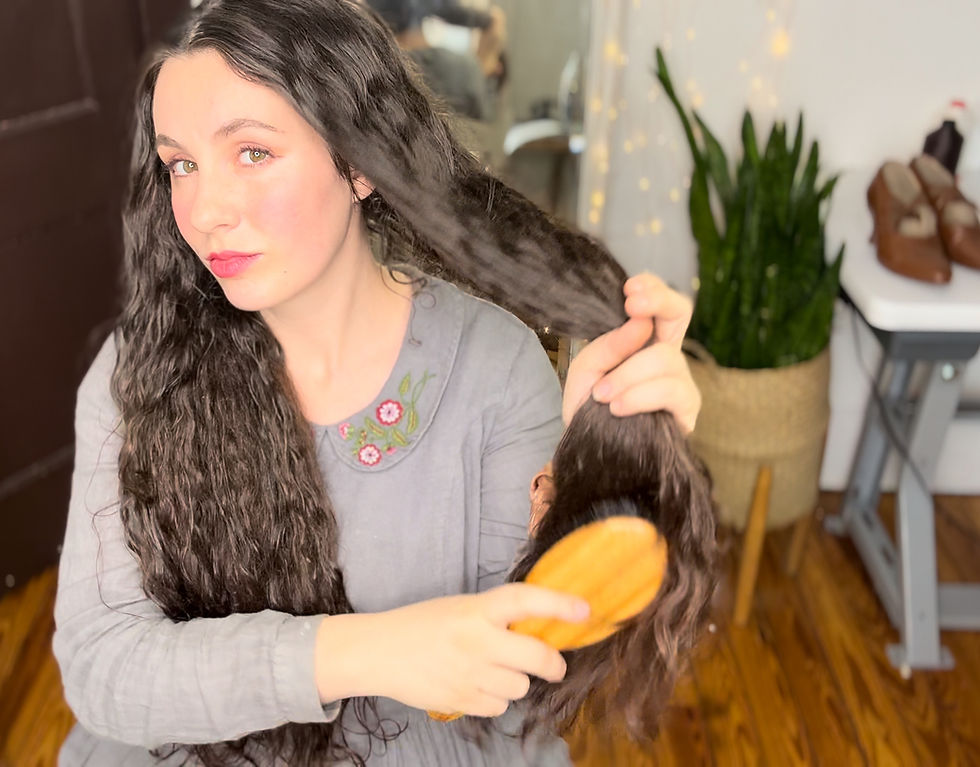
This is not because I am some kind of magical hair guru, because I’m not.
Rather, it's because I point people in the direction of what, to some degree, they have always known. Namely, that before the rise of the modern beauty and hair care industries, hair care practices were so much simpler and less consumeristic, and yet they were far more effective at growing truly strong, thick, healthy hair. We can see this given the prevalence of so many women in Medieval, Victorian, and Edwardian times with literal floor length hair, not to mention the many women in cultures who still follow these practices, like India, also having ridiculously long hair.

So let's break down these 7 simple hair growth tips, inspired by those long haired ladies of the past, and tested by my own decade of natural hair care experience, plus the experiences of thousands of other women. Because you can grow long, thick, healthy hair at any age.
Tip # 1 Mainly Dry Detangle

Mainly dry detangle your hair. Wet hair is weaker, so it’s best to avoid detangling soaking wet hair and do the majority of your detangling either dry, with a light oil, or with a light spritz of detangler. For my curly hair, I tend to work through these steps chronologically. Meaning, that first I detangle my hair in a dry state with my fingers as much as I can, then I add some light oil, detangle some more, then finally if needed I might spritz it with a bit of moisture in some form - usually water and ACV, aloe juice, or a spray leave-in, and do my final detailed detangling.
I have curly hair, and years ago when I was following the curly girl method I would detangle my hair with conditioner in the shower. My curl definition was great, but my hair seemed to never grow.
When I switched to dry detangling, even though it felt weird as a curly haired person, I started retaining more length, meaning that when I had been wet detangling, I had probbaly been causing lots of breakage without realizing it.
If your hair is fine, detangling it gently and mainly in a dry state becomes even more important, because fine hair breaks even more easily, and so if you limit handling it when it’s wet, you will retain more length.
But detangling is only part of the healthy hair equation. Let’s talk about a simple, easy technique that women from all around the world have been using for centuries.
Tip # 2 Hair and Scalp Oiling

Hair oiling has been used for centuries upon centuries, and practiced in different forms around the world. Paired with scalp massage, it boosts blood flow and nutrients to the scalp, and can deliver herbal medicinals directly to the hair follicles to encourage them to operate optimally.
It also protects the hair strands water if applied before washing, which can help reduce hygral fatigue and decrease water-induced breakage.
These first two tips are what moved the needle for me the most in my hair care journey, and yet they were, at first, the most foreign to me.
Of course, even the best external care won’t do much if your body inside doesn’t feel safe enough to grow hair…
Tip # 3 Eat Enough Nourishing Food
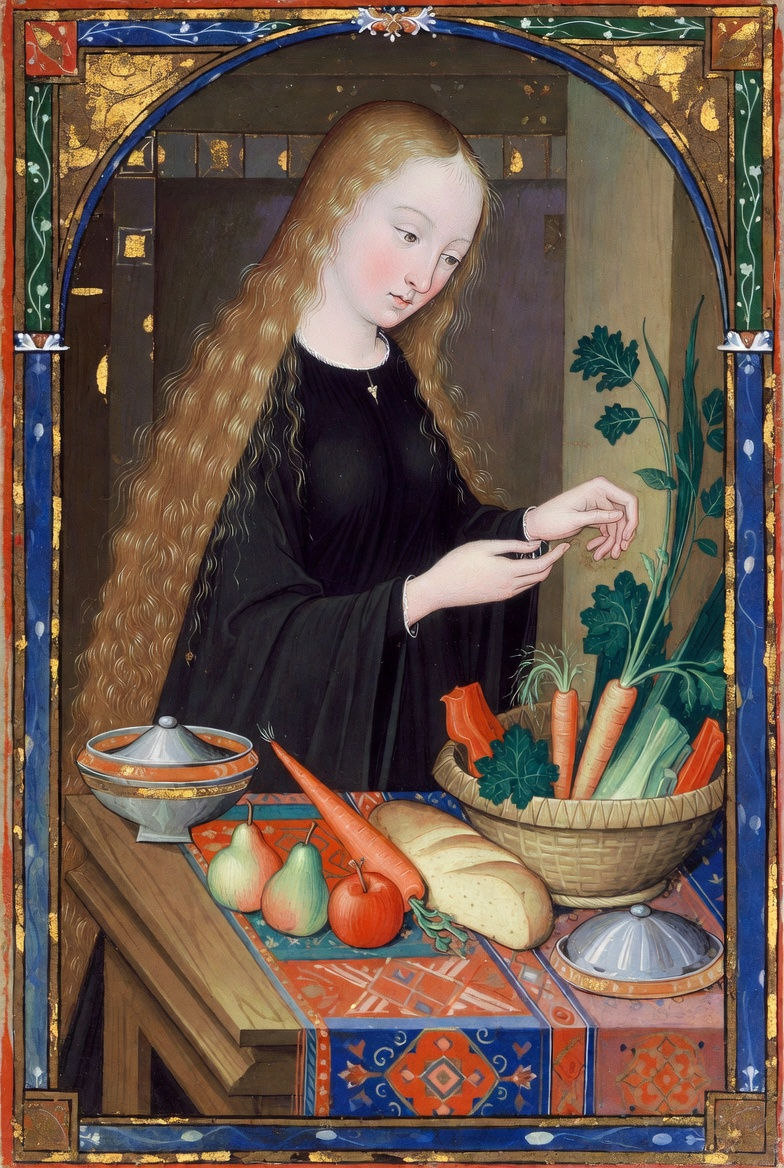
This is a big one. Many women in our culture today are not eating enough food period, let alone getting enough nutrients. Cutting out food groups, or skipping meals especially, can wreak havoc on our hormones, like our thyroid hormones, as well as sex hormones like estrogen and progesterone, that keep our hair in the growth phase and lessen shedding.
Historically people found the most attractive female body shape to be what many modern people would deem “chubby”, because they valued the appearance of being well nourished.
Hair is considered a biological extra, so your body will only ever prioritize it if it’s feeling safe and stable, getting enough food, not over exercising, etc.
Once your body feels nourished, it’s time to rethink what you put on your hair…
Tip # 4 Use DIY Hair Products and Don’t Over Wash

Using home concoctions as your go to hair products will ensure you are getting potent, fresh products that don’t contain dangerous chemicals or unnecessary fillers.
Also, don’t over wash your hair, because this can strip your scalp and hair oils unnecessarily. The definition of “over-washing” is going to look different for everyone, as the amount of wet-cleansing that your hair and scalp need at any given time are highly individual. When you do wash, using something gentle and natural is your best bet for the long term health of your hair and scalp.
To come back to DIY products, the massive beauty industry we have today is a very recent invention. Prior to about the 1920’s, people would generally make their own cosmetic and hair care products using simple, whole ingredients typically found in their kitchens or garden.
The benefits of this are that these products are often very potent, because they are made fresh and made using ingredients that are typically edible, full of real, bioavailable nutrients, not made with fillers and preservatives, and can be tailored to the individual’s needs at the time.
When you make more of your own products, even if it is just a once weekly moisturizing hair masque, it is going to change the way you look at hair care. Rather than being a one size fits all for life deal, it becomes an intricate dance of seeing what your hair needs and treating it accordingly.
But sometimes even good food and good products need some extra support from within…
Tip # 5 Balance Your Hormones

Hormone balance is a huge part of health, especially as women, and especially as we age. Now of course this is far easier said than done, and will likely require consulting with medical professionals and doing lots of your own research.
I am all about historical hair care principles, and while historical people didn’t really think in terms of hormones or balancing hormones, at least until the late 1800’s, they were living in a world that contained much less of the endocrine disruptors that we face in our modern world.
For example, we are inundated with chemicals, foods, and lifestyles that raise our stress hormone levels, while depressing our thyroid function.
Not to mention how these forces can dramatically drop our calming hormones like progesterone, pregnenolone, and oxytocin. So it is wise to understand even a small amount about hormones levels, the challenges our modern world can throw at our hormone levels, and gentle ways to optimize our hormone levels.
Again, this is going to be different for everyone, of course, and I am not a doctor or health professional of any kind.
That said, I have for years been fascinated by the topic of hormone balance through my own experiences and several pregnancies, postpartums, and general life as a woman.
In fact, I recently lost a ton of hair due to hormone shifts combined with poor dietary choices I made in an effort to lose weight. My hormones and thyroid function were thrown so far out of whack, so it has sent me on a journey of healing. My hair is quickly improving as a result. So personally, I have been using topical bioidentical progesterone, applied to my wrists and even my face each day, as well as an all natural desiccated thyroid supplement. The latter is what was used starting in the late 1800’s to treat thyroid dysfunction, and there are some shocking archives of before and afters of people with suspected thyroid issues who were treated in this way and experienced significant improvements in their hair. This is just what I hav been doing and is not medical advice.
With your insides supported, it’s important to talk about how you wear your hair every day…
Tip # 6 Wear Protective Hair Styles

Historically, many of most women had very long hair by our modern standards, but they were not wearing it loose everyday. Rather, they would wear it in what we will call protective styles. Protective styles are ones which keep your hair up and off your body, with the ends tucked away. This could be a bun, a French twist, or even braids to some degree. This aids with length retention, because everyone’s hair grows, but if the ends keep breaking off, you won’t see that growth. Protective styles preserve the health of your hair ends to limit the chance of breakage. I myself have been wearing my hair tied up in a silk scarf most days when I am at home, and it is working quite well to protect my hair ends.
And finally, never underestimate the power of how you live your everyday life…
Tip # 7 Prioritize the Good, Simple Things in Life

Our hair is an extension of our state of being and our inner health. As such, Prioritizing the good and simple things in life, like sleep, sunshine, time with loved ones, and personal connection, will go a long way to supporting your health, and yes, your hair. When we see all of these historical women with super long hair, and wonder what they did with their hair that we have forgotten about today, This is s much overlooked topic. I think it’s something that came much more naturally to historical people before tv, social media, industrialization, and the ensuing chaos.
These aren’t complicated changes, but when you put them together, and practice them as consistently as you can, they can truly transform your hair. If you try even a couple of these, let me know in the comments how it goes. I also love hearing your own hair care stories, and what you think about these tips and techniques.
And if you want to give your hair the same herbal boost I use every day, check out my award-winning herbal hair enriching oil. These oils have helped thousands of women at all ages and with all hair types to improve the health of their hair, and we now offer it in a light version as well.
Thank you for being here—take care of yourself, and I’ll see you in the next article.


I often returned for one more match because FNF made every improvement feel meaningful, encouraging me to refine my timing while enjoying its memorable collection of catchy songs.
Me parece muy interesante la información que compartes en este artículo. Para quienes seguimos los sorteos, también resulta útil consultar información actualizada sobre la lotería nacional. Tener los resultados y datos organizados en un solo lugar facilita la consulta y permite mantenerse informado de manera rápida y sencilla.